Choosing the right Line Array Loudspeaker begins with the room, not the product brochure. A concert hall, outdoor festival, worship venue, and corporate event demand different acoustic solutions. The same cabinet may sound powerful in one space and uneven in another. Ceiling height, audience depth, stage width, and ambient noise all matter.
Bob McCarthy, a respected sound-system designer and author, has stated, “A line array is not a line source.” This short warning deserves attention. A real loudspeaker array has spacing, cabinet angles, frequency limits, and physical boundaries. Its performance depends on design and deployment. Engineers must examine horizontal coverage, vertical control, maximum sound pressure level, low-frequency extension, and system headroom. They should also check whether the manufacturer provides prediction software, measurement data, rigging documentation, and dependable technical support.
Listen carefully. Walk the room.
A practical selection process includes more than comparing wattage or cabinet size. Experienced technicians measure the venue, model coverage, and test vocal clarity from front to rear seats. They watch for excessive overlap, reflections from walls, and uncomfortable high-frequency buildup. Weather protection may be essential outdoors. Transport weight may matter more than peak output for touring crews.
There is no perfect choice. That is the honest part. Some specifications remain difficult to compare across brands, and published data may not reflect every installation. A reliable decision combines verified measurements, field experience, budget discipline, and a realistic understanding of the audience. The right Line Array Loudspeaker should serve the room clearly, consistently, and safely—not merely look impressive on stage.
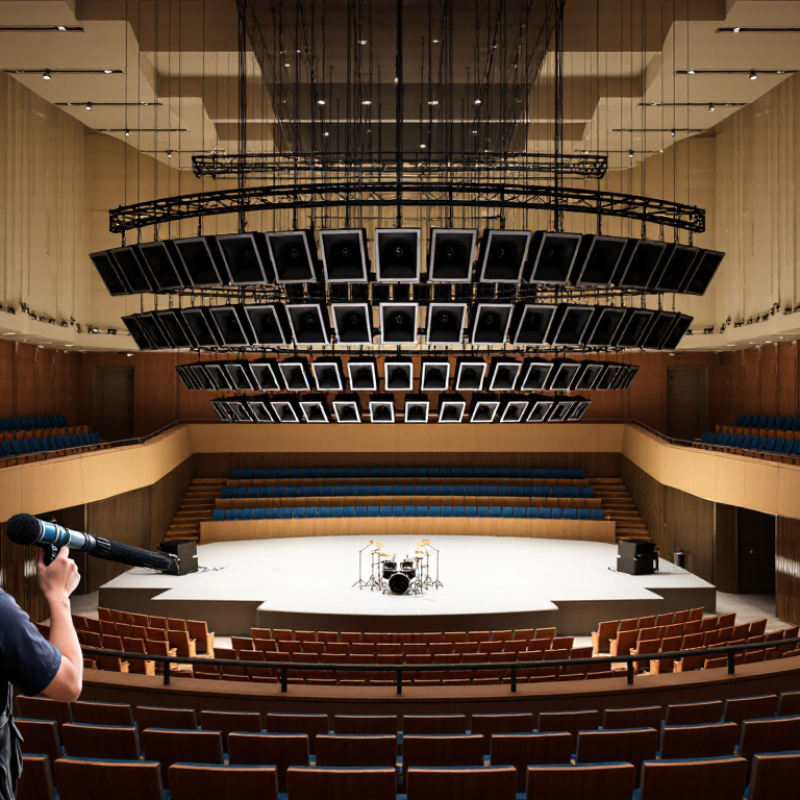
How to Choose the Right Line Array Loudspeaker?
Define the venue before comparing loudspeakers. Measure the room length, ceiling height, stage width, and balcony position. Walk the room. Notice reflective glass, low ceilings, and sound-absorbing curtains. These surfaces can change speech clarity and musical detail. A narrow hall may need controlled vertical dispersion, while a wide outdoor audience may require broader horizontal coverage. I once underestimated a shallow balcony and left listeners outside the main acoustic pattern. That mistake was avoidable.
Estimate the audience area, not only the maximum headcount. A seated crowd of 600 needs different coverage from 600 standing guests spread across a field. Mark the nearest and farthest listening positions. Then check the expected sound pressure level at both points. The front rows should remain comfortable, while distant listeners still receive clear vocals and balanced music. Use verified polar plots and frequency-response data, rather than relying on cabinet size alone. Data can still mislead when the room is unusually reflective.
Coverage planning also affects the number of elements, aiming angle, and subwoofer placement. A qualified technician should confirm rigging limits, suspension points, and local safety requirements. Small aiming changes matter. Test with spoken announcements before the event, because speech exposes uneven coverage quickly. I often revise the prediction after hearing the room. Real spaces rarely behave perfectly. Leave practical adjustment time for delays, shading, and unexpected audience movement.
Choosing a line array loudspeaker starts with the room, not the equipment list.
During a recent venue check, I measured a 30-meter audience area with a low balcony and reflective sidewalls. A straight array produced strong rear coverage but over-energized the front rows. A gentle J-curve reduced that imbalance. In smaller rooms, fewer enclosures with careful splay angles often perform better than a tall stack.
Configuration affects acoustic control. Straight elements can project energy evenly toward distant seats. Curved sections spread sound across nearby listeners. Progressive curvature can reduce level changes between the first and last rows. However, excessive curvature may weaken long-range clarity.
Small adjustments matter. One degree can change the tonal balance.
Components deserve equal attention.
Low-frequency drivers provide impact, while midrange elements preserve vocal detail. High-frequency devices and waveguides shape intelligibility and horizontal coverage. Check crossover points, phase behavior, amplifier headroom, and DSP filters together. A system may show impressive peak output but still sound harsh beside a concrete wall. I always inspect coverage at several seats, not only from the mixing position. A handheld measurement microphone helps, though it cannot replace trained listening. Rigging hardware, load ratings, and manufacturer specifications must also be verified before operation. My own early mistake was trusting a prediction model too quickly; the model looked clean, but the balcony sounded thin.
How to Choose the Right Line Array Loudspeaker?
Choosing a line array loudspeaker starts with the venue, not the cabinet shape. I have learned this during sound checks in halls, outdoor stages, and narrow worship spaces. Measure the audience area before comparing specifications. A speaker that sounds powerful near the stage may lose clarity at the back.
Power ratings need careful reading. Compare continuous power, program power, and peak power with the amplifier’s real output. Also check impedance and sensitivity. A high wattage number alone does not guarantee strong, clean sound. Leave reasonable headroom to reduce distortion during speech and music. I once trusted peak figures too much, and the system sounded strained before the show ended.
Frequency response should match the program material. Speech-focused events need clear midrange detail, while live music may require deeper low-frequency support. Check whether additional subwoofers are necessary. Look beyond the widest frequency claim. Measurement tolerance and test conditions can change the result.
Throw distance depends on more than advertised range. Examine vertical and horizontal coverage, array curvature, cabinet count, and rigging height. Longer venues may need tighter vertical control, while a shallow room benefits from broader coverage. Walk the room during testing. Listen at the front, middle, and rear seats. Small gaps in coverage can become obvious when the audience arrives. Use manufacturer measurements, then verify them with real placement, because specifications cannot predict every room.
Match loudspeaker specifications to the required amplifier power, frequency range, and audience throw distance. The chart shows representative engineering targets for compact, medium-throw, and long-throw line array systems.
Higher-power systems generally support longer audience distances, while lower-frequency extension depends on enclosure size, array length, and system configuration. Always verify coverage, maximum SPL, amplifier headroom, and venue acoustics before selecting a system.
How to Choose the Right Line Array Loudspeaker?
Rigging should be your first practical check, not an afterthought. Inspect the frame, pins, safety points, and documented working load. A cabinet may sound impressive but remain unsuitable for your venue. Confirm the array angle range matches the audience geometry. Small angle changes can shift coverage noticeably. During setup, experienced technicians also check suspension height and center of gravity. I have seen excellent systems perform poorly because the array hung too low.
Processing determines whether the system sounds controlled or merely loud. Review available equalization, delay, limiters, and preset flexibility. Match amplifier channels and processing resources to the loudspeaker’s recommended settings. Measure the room with microphones, then compare the data with careful listening. Numbers guide decisions, but ears catch uneven vocal presence. Leave headroom for peaks. Over-processing can create a clean graph and a tiring performance.
Deployment affects reliability every night. Consider transport weight, cabinet size, connector access, and setup time. A compact array may work better than a larger model in a narrow hall. Check coverage at the front rows, rear seats, balconies, and stage edges. Confirm impedance, power requirements, signal distribution, and control compatibility across the complete system. Plan for weather protection when used outdoors. I sometimes prefer a simpler configuration because fewer links mean fewer failure points. That choice is not always perfect, and post-event notes often reveal what the original design missed.
Reliability begins with evidence, not impressive specifications. Request measured data for maximum SPL, coverage consistency, distortion, and weather resistance. Check test conditions carefully. Outdoor dust, moisture, and repeated transport expose weak cabinets quickly. A 2024 report from Grand View Research estimates the global loudspeaker market will grow at over 6% annually through 2030. Growth increases choices, but it does not guarantee dependable engineering. Ask for service records, parts availability, and realistic operating limits. I have seen systems fail because installers trusted peak power figures too much.
Expandability should match your venue plan. Choose modules that support consistent rigging, digital control, and future coverage changes. A small hall may later need wider horizontal coverage or delay fills. Confirm that additional cabinets will share compatible processing and accessories. The 2024 AVIXA IOTA report forecasts continued professional AV growth through 2028, reflecting stronger demand for flexible systems. Still, forecasts vary by methodology. Treat them as planning signals, not promises.
Budgeting requires more than comparing cabinet prices. Include amplifiers, transport cases, rigging hardware, software licenses, labor, inspections, and replacement drivers. A cheaper system can become expensive after repeated rentals. Ask whether the manufacturer provides manuals, firmware updates, repair training, and parts for at least seven years. Long-term support matters. Keep a written lifecycle estimate, even if some figures remain uncertain. That document often reveals the real cost before installation begins.
Measure the audience area, room depth, ceiling height, balconies, and stage edges.
Compare continuous, program, and peak power with the amplifier’s real output.
Speech needs clear midrange detail.
Examine vertical coverage, horizontal coverage, cabinet count, array curvature, and rigging height.
Check frames, pins, safety points, working loads, and angle ranges.
Review equalization, delays, limiters, and preset flexibility.
Consider transport weight, cabinet size, connector access, and setup time.
Include amplifiers, cases, rigging hardware, software, labor, inspections, and replacement drivers.
Choosing the right Line Array Loudspeaker begins with a clear understanding of the venue, audience size, and required coverage area. Consider the room’s dimensions, audience layout, acoustics, and expected listening distance to determine the appropriate system design. Compare different line array configurations, driver components, and acoustic performance, paying attention to vertical control, horizontal dispersion, clarity, and consistency across the venue.
Next, match the loudspeaker’s power capacity, frequency response, and projection distance to the event’s practical needs. Evaluate rigging options, signal processing, deployment requirements, and compatibility with existing equipment to support efficient installation and reliable operation. Finally, review system durability, expandability, total budget, maintenance needs, and long-term technical support. A well-planned choice should provide balanced sound, flexible deployment, dependable performance, and room for future expansion without creating unnecessary complexity or cost.

TACT Pro Audio